At a Glance
- Gingivitis = inflamed gums caused by plaque and bacteria.
- Common signs: red or swollen gums, bad breath, drooling, pawing at the mouth, reluctance to eat.
- Early veterinary care prevents progression to periodontitis and tooth loss.
- Best results come from professional cleaning + home dental care + regular checkups.
Who This Is For
Cat owners who’ve noticed mouth discomfort, bad breath, or gum redness—and anyone building a preventive dental routine for a healthy adult cat, senior cat, or kitten.
How to Choose a Treatment Plan
Your veterinarian will tailor care to your cat’s age, health, and disease severity. Typical components include:
- Exam and dental X-rays: To assess gum health, roots, and hidden disease.
- Professional dental cleaning (under anesthesia): Removes plaque and tartar above and below the gumline.
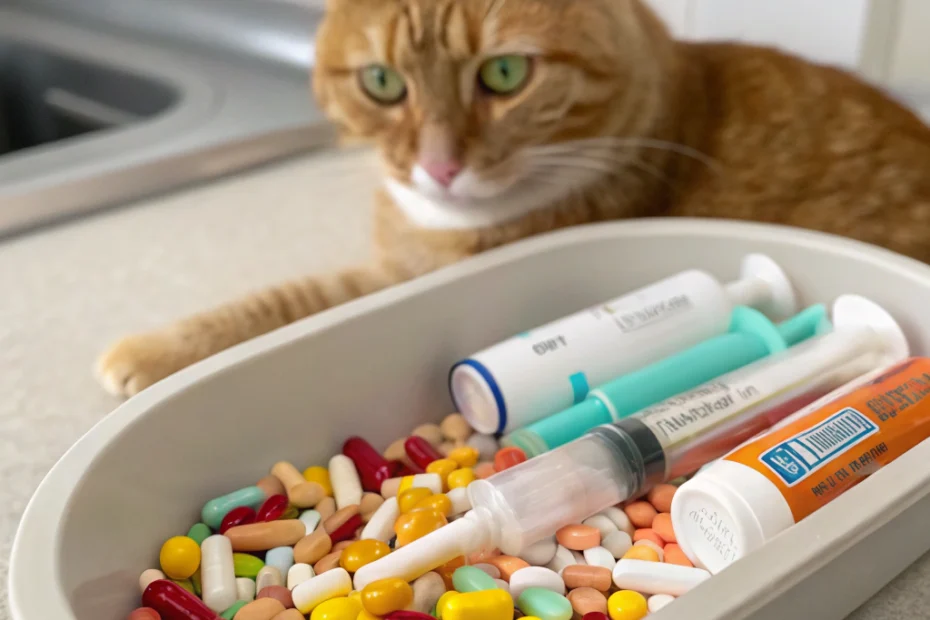
- Targeted medications (if indicated): Pain control, anti-inflammatory therapy, and antibiotics only when infection is documented.
- Home plan: Toothbrushing, dental diets/treats, or rinses to slow plaque return.
Safety & Setup
- Follow vet dosing exactly: Never use human oral products (many contain xylitol or fluoride levels unsafe for cats).
- Introduce slowly: Start tooth care with brief sessions using a finger brush or gauze; reward calm behavior.
- Watch for side effects: Vomiting, diarrhea, facial swelling, or lethargy after any new medication—call your vet.
- Pain control matters: Cats hide pain; use only vet-approved analgesics (never give acetaminophen or ibuprofen).
Core Pillars of Long-Term Dental Health
- Nutritional support: Balanced diet; dental diets can reduce plaque accumulation.
- Daily hygiene: Aim for toothbrushing 3–7 times/week with cat-safe toothpaste.
- Chews & toys: Choose Veterinary Oral Health Council (VOHC)-accepted dental chews sized for cats.
- Hydration: Fresh water supports saliva production, which helps buffer acids and wash away food debris.
- Regular checkups: Dental rechecks every 6–12 months (sooner if your cat has ongoing gum disease).
Home Environment & Handling Tips
- Create a calm brushing routine at the same time daily; stop before your cat loses patience.
- Use a soft cat brush or finger cot; angle bristles at the gumline with gentle circles.
- Offer a small treat or play session after brushing to build positive associations.
- Keep oral rinses and gels out of reach; store medications safely.
Comparison: Treatment Tools & When to Use Them
- Professional cleaning: Gold standard for established gingivitis; addresses below-gum tartar you can’t reach at home.
- Toothbrushing: Most effective daily tool to prevent recurrence after cleaning.
- Dental diets/chews/rinses: Useful add-ons if brushing is limited; choose vet-recommended products.
- Medication: Short courses for pain/inflammation or infection; not a substitute for cleaning.
FAQs
Can gingivitis be reversed?
Often yes—if caught early and followed by professional cleaning plus consistent home care. Advanced periodontitis requires more extensive treatment.
How often should my cat get a dental cleaning?
Many cats need cleanings every 12–24 months; cats with chronic gingivitis may need them more frequently. Your vet will set the interval.
Is anesthesia necessary?
For a thorough, safe cleaning (especially below the gumline) and dental X-rays, anesthesia is the standard of care.
My cat won’t allow brushing—what else can I do?
Try vet-approved dental gels/rinses, VOHC-accepted diets or chews, and schedule regular professional cleanings. Gradual desensitization may make brushing possible later.
Are supplements helpful?
Some products support oral health, but evidence varies. Use only items your veterinarian recommends to avoid ineffective or unsafe ingredients.
When to See the Vet Urgently
- Refusal to eat, dropping food, or significant weight loss.
- Oral bleeding, pawing at the mouth, foul odor worsening suddenly.
- Facial swelling or visible tooth fractures.
Medical disclaimer: This article is educational and not a substitute for veterinary care. Always consult your veterinarian for diagnosis and treatment recommendations for your individual cat.