Dealing with a cat urine stain on your couch can be a frustrating experience for any cat owner. Understanding how to get cat urine out of couch surfaces effectively is crucial to maintaining a clean and pleasant home environment. In this article, you’ll learn practical steps to remove these stains and odors, ensuring your furniture stays fresh and welcoming for both you and your feline friend.
how to get cat urine out of couch at a Glance: Key Facts for Cat Owners
Cat urine can be particularly challenging to remove due to its potent odor and potential to stain fabrics. Acting quickly and using the right cleaning methods are essential to success.
- Cat urine contains urea, which breaks down into ammonia, causing strong odors.
- Enzymatic cleaners are often recommended for breaking down urine components.
- Regular couch maintenance can prevent future incidents.
How to Choose
Choosing the right cleaning strategy depends on several factors, including the material of your couch, the age of the stain, and your personal preferences for cleaning products. Here are some considerations:
Type of Couch Material
Different materials require different cleaning approaches. For instance, leather may need a different method compared to fabric.
Stain Age and Severity
Older stains might need more intensive treatment, while fresh stains can often be addressed with quick action.
Product Preferences
Consider whether you prefer using commercial enzymatic cleaners, homemade solutions, or natural products.
Safety & Setup
When cleaning your couch, safety for both your cat and yourself is paramount. Here’s how to do it safely:
- Always test cleaning solutions on an inconspicuous area first to prevent damage.
- Ensure the room is well-ventilated during cleaning to avoid inhaling any fumes.
- Keep cleaning products out of reach of pets and children.
- Rinse the cleaned area thoroughly if using chemicals, to prevent any potential harm to your cat.
Core Pillars
Success in removing cat urine from couches relies on three main pillars: timeliness, the right products, and prevention. Let’s explore each:
Timeliness
Addressing the stain as soon as possible prevents it from setting and becoming more difficult to remove.
The Right Products
Enzymatic cleaners are often recommended as they break down the components of urine effectively.
Prevention
Encourage your cat to use the litter box by keeping it clean and accessible.
Placement & Environment Tips
Creating a cat-friendly environment can reduce the likelihood of accidents on your couch:
- Place litter boxes in quiet, easily accessible locations.
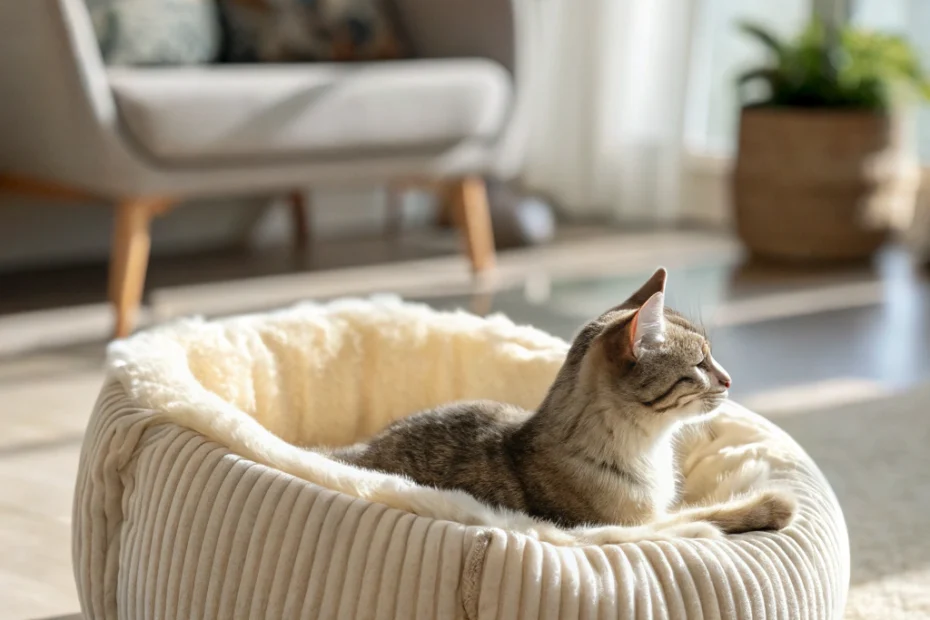
- Ensure your cat has comfortable resting spots, like a cozy cat bed shaped like a miniature sofa.
- Regularly clean and maintain your couch to keep it free of odors that might attract your cat.
Comparison with Alternatives
While enzymatic cleaners are highly effective, there are alternatives worth considering:
Vinegar and Baking Soda
This natural solution is great for those who prefer chemical-free cleaning but may not be as effective on old stains.
Hydrogen Peroxide Solutions
These can be effective on some fabrics but should be used with caution as they may bleach colors.
FAQs
Can I use bleach to clean cat urine from my couch?
Bleach is not recommended as it can damage fabrics and does not neutralize the components of cat urine.
How soon should I clean cat urine from my couch?
As soon as possible. Fresh stains are much easier to remove than those that have set.
Are there any homemade solutions I can use?
Yes, a combination of vinegar and baking soda can be effective for fresh stains.
Can professional cleaning help?
For severe or persistent stains, professional upholstery cleaning can be a good option.
How can I prevent my cat from urinating on the couch?
Ensure the litter box is clean, provide plenty of resting spots, and address any health issues with your vet.
What to Do Next
Now that you know how to get cat urine out of couch surfaces, it’s time to put these strategies into action. Focus on prompt cleaning, using the right products, and creating a cat-friendly environment. Remember, prevention is key. Keep observing your cat’s behavior and consult your veterinarian if problems persist.
Disclaimer: Always consult your veterinarian for personalized advice regarding your cat’s health.